Cyber Resilience: Foundation for Sustaining User Trust

As the technological capabilities of ADAS and AI-driven systems continue to mature, the barriers to mass adoption of autonomous vehicles are no longer primarily technical. Realworld applications, ranging from robotaxis and logistics delivery robots to autonomous truck fleet operations are already emerging through industry partnerships and evolving regulatory frameworks.

Increasingly, the primary barrier to autonomous vehicle adoption is shaped by user perception rather than technological readiness. Psychological and behavioral factors are beginning to influence demand, with public sentiment playing a critical role in determining adoption trajectories.  

Even a single incident or news of investigations by regulatory bodies can trigger widespread concern, resistance, and skepticism. These reactions reinforce the perception that autonomous systems should not operate on public roads, creating a mental barrier to full autonomy, and in turn, slowing investment and business development initiatives.  

Understanding this behavioral dimension is critical. The key question for mobility innovators now extends to whether users will continue to trust the system when something goes wrong. This shift calls for cyber resilience   the ability to maintain secure and reliable operations even under disruption   to serve as a foundation for sustaining user trust and enabling scalable adoption in a smart mobility ecosystem.  

Complexity of Modern Vehicle Systems  

Mobility is no longer a standalone product; it is evolving into an interconnected system of systems. The boundaries between mobility domains are increasingly blurred, with vehicles exhibiting robotic characteristics and distinctions between various modes of transportation gradually converging.  

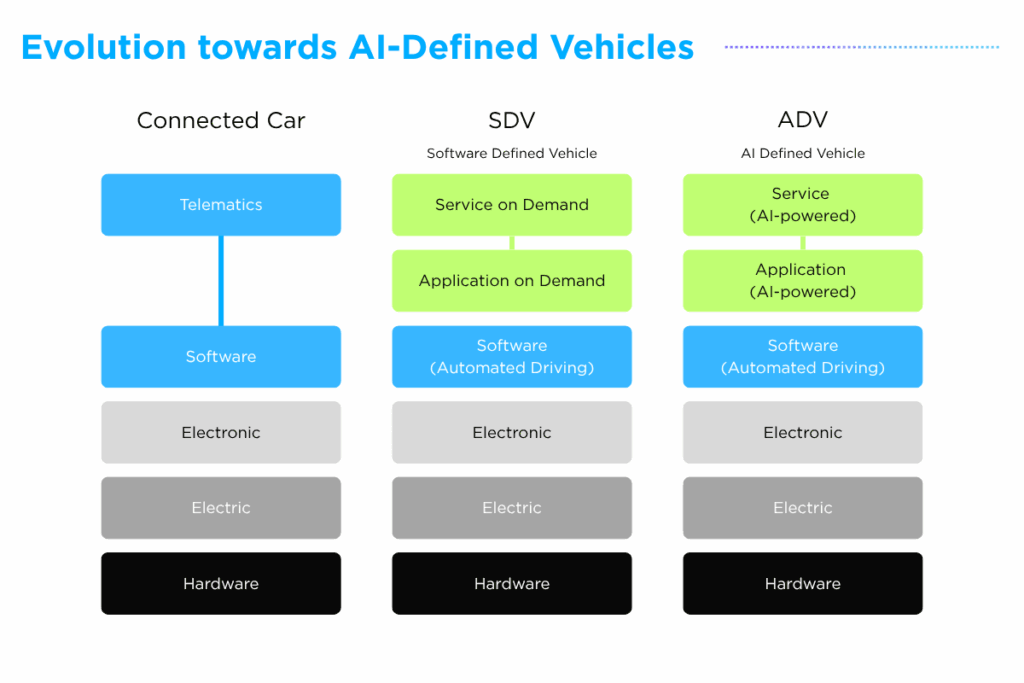
As vehicle platforms evolve   from connected cars to software-defined vehicles, and ultimately AI-driven systems   their internal architecture has expanded significantly. What was once centered on hardware, electrical, electronic, and software components now extends to include on-demand applications, service-based functionalities, and AI-powered capabilities.  

Evolution towards AI-Defined Vehicles (ADV)

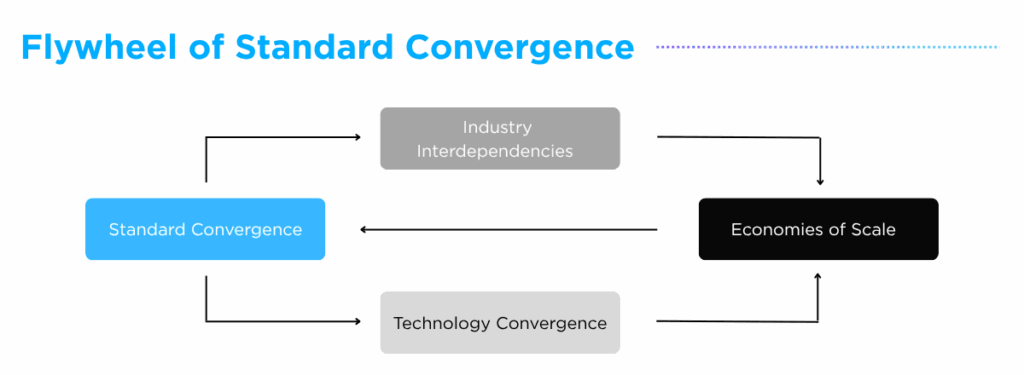
While this evolution enables greater functionality, it also introduces increased system interdependencies and, consequently, higher levels of unpredictability. This transformation is not occurring in isolation, but driven by a self-reinforcing cycle. 

Standard Convergence Flywheel

  • Standard Convergence: Common frameworks and regulations align across industries, enabling interoperability and shared development baselines.  
  • Technology Convergence: Shared architectures, platforms, software stacks are adopted across domains, accelerating cross-industry innovation.
  • Industry Interdependencies: Automotive, robotics, infrastructure and adjacent sectors become tightly interconnected, increasing system-level reliance.  
  • Economies of Scale: Wider adoption reduces costs and barriers, enabling faster deployment and reinforcing shared ecosystems.

This cycle continuously amplifies system connectivity and complexity, ultimately resulting in tightly coupled environments where disruptions are difficult to isolate and contain. They must be designed to function reliably within uncertain and dynamic environments. This requires not only protection against threats, but also the ability to maintain predictable behavior, ensure operational continuity under disruption, and support consistent system performance. 

In response to this shift, cyber resilience gains strategic importance. Cyber resilience refers to the ability of a system to withstand, recover from, and continue operating despite cyberattacks. It is no longer an enhancement, but a core requirement for ensuring that complex, interconnected systems remain stable, predictable and operable in real-world environments.  

Enhancing User Trust through Cyber Resilience  

While cyber resilience defines how systems operate under failure, its ultimate impact is measured in user trust. Research from University of New South Wales (Link) highlights that trust in autonomous vehicles is highly sensitive to cyber incidents, where even a single attack can undermine public confidence at scale. The study further emphasizes that trust is shaped by how effectively organizations prepare for and respond to such events in ways that align with user expectations.  

In this context, cybersecurity maturity becomes a critical determinant of adoption. Organizations that fail to demonstrate adequate preparedness risk eroding public confidence, which can slow adoption, reduce usage, and ultimately hinder the broader development of the autonomous mobility ecosystem.  

Recognizing the relationship between user trust and long-term business viability, systems must incorporate safeguards that reinforce user confidence. This includes enabling predictable behavior, supporting controlled responses and maintaining stable operation throughout the system lifecycle. As complexity increases across interconnected environments, trust evolves into a system-level requirement, extending beyond individual products to vehicles, services and networks.  

Enabling this shift requires more than optimizing individual technologies; it demands an integrated infrastructure approach that operates seamlessly across system boundaries   an approach that AUTOCRYPT is actively advancing. Through CRA-aligned regulatory readiness, in-vehicle cybersecurity solutions, and V2X security services, AUTOCRYPT supports OEMs and Tier 1 suppliers in building cyber-resilient systems, representing a natural evolution beyond traditional cybersecurity.  

Additional Resources

How EURO 7 Reinforces WP.29 Cybersecurity Compliance

UN R155 is widely regarded as a critical compliance milestone for OEMs and Tier suppliers under the UNECE WP.29 framework. Without a certified Cybersecurity Management System (CSMS), vehicles cannot obtain type approval in contracting markets, making compliance essential for market access. By contrast, comparatively less attention has been given to the EURO 7 standards EU’s latest vehicle emissions and durability regulatory framework set to begin application from November 2026. 

The EURO 7 standards, embedded within Regulation (EU) 2024/1257 (Link) is commonly viewed as an environmental regulation introducing new pollutant limits, battery performance thresholds, anti-tampering provisions and lifecycle monitoring requirements under the EU type-approval framework. However, its significance extends beyond conventional emissions compliance and should be understood within an integrated regulatory architecture alongside UN R155.  

This blog post aims to clarify why EURO 7 does not operate independently of WP.29 cybersecurity requirements and why, in practice, it functions as a structural reinforcement of vehicle type-approval obligations. Understanding how EURO 7 strengthens the operational relevance of UN R155 is essential to safeguarding type approval within an increasingly interconnected regulatory environment.

I. Understanding EURO 7

Role of the EURO Series in the Automotive Industry

The EURO regulatory framework has historically played a defining role in shaping automotive engineering priorities across Europe. From its earliest iterations, its core objectives have centered on reducing harmful pollutants, protecting public health and air quality, and providing predictable compliance pathways for manufacturers operating within the European market.  

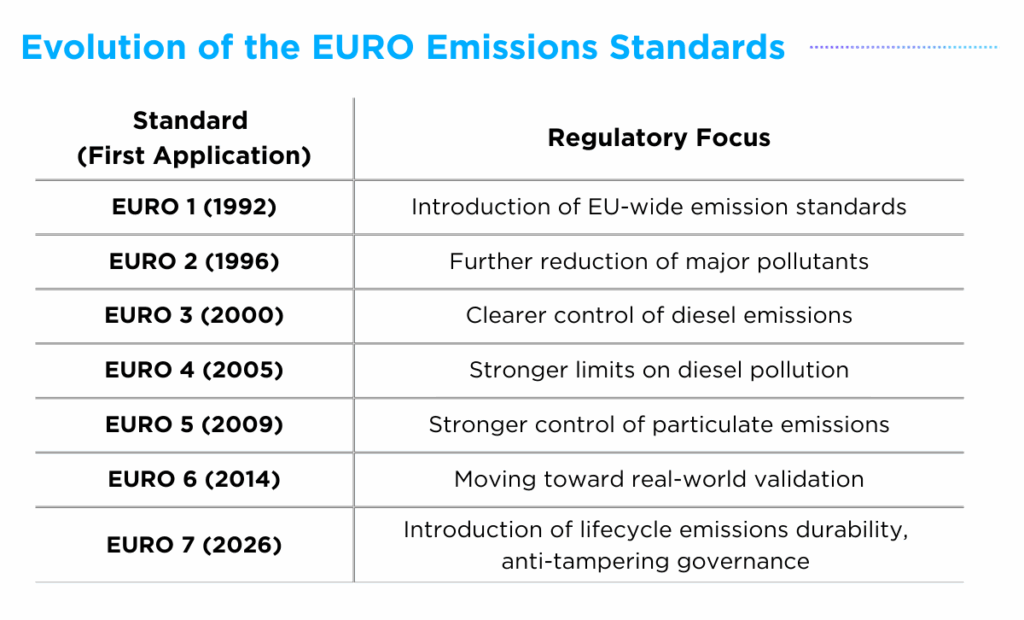
Evolution of the EURO Emissions Standards: From EURO 1 to EURO 7

From EURO 1 through EURO 6, each iteration progressively tightened emissions limits, expanded testing methodologies, and increased alignment with real-world driving conditions. However, despite these advancements, the underlying regulatory logic remained largely certification-based and event-driven. Vehicles were validated under defined laboratory and real-driving emissions (RDE) test conditions, and once type-approval was granted, they were presumed compliant unless defects emerged during operation. 

Transition from EURO 6 to EURO 7 

Up until EURO 6, the standards were designed to evaluate predominantly mechanical vehicle architectures, where emissions behavior was largely hardware-determined and relatively stable over time. The turning point came with the Dieselgate corporate scandal, in which automakers engaged in the large-scale, deliberate use of defeat devices to manipulate emissions testing outcomes. Although vehicles passed defined regulatory testing conditions, their emissions performance diverged under real-world driving conditions, exposing the vulnerability of a certification-centered regulatory model.  

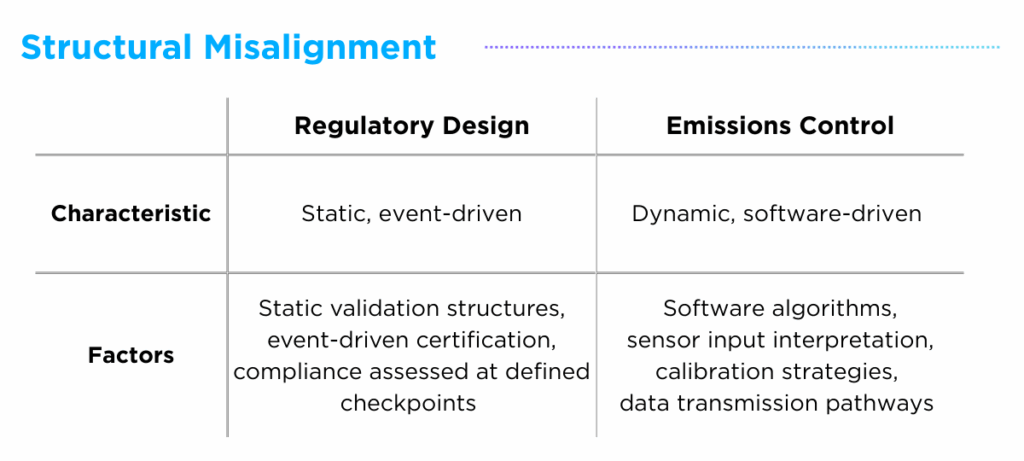
This incident revealed a structural misalignment between regulatory design and vehicle behavior, where compliance was assessed in a static manner while modern emissions performance had become dynamic and increasingly software-driven.  

Transition from EURO 6 to EURO 7: Structural misalignment between emissions behavior and regulatory design

II. EURO 7 within the WP.29 Cybersecurity Architecture

How EURO 7 Reflects the Software-Defined Nature of Modern Vehicles  

EURO 7 redesigns the regulatory architecture to reflect the software-defined nature of modern vehicles, recognizing that emissions behavior can be influenced by software logic and data modifications occurring throughout the vehicle lifecycle.  

Through amendments to Regulation (EU) 2018/858 (Link) Article 84, EURO 7 explicitly incorporates anti-tampering provisions, security and cybersecurity measures, enhanced market surveillance enforcement and a strengthened penalty framework. Under Article 3 (45), tampering is broadly defined to include disabling or modifying engine control systems, battery systems, OBD/OBM/OBFCM systems, odometers, software and logical control elements, and related data pathways.

At its core, EURO 7 reflects a regulatory realization: emissions compliance is inseparable from software integrity. As emissions-critical systems become software-governed, regulatory compliance structurally intersects with the cybersecurity governance framework established under UN R155, which remains essential for vehicle type approval.  

Intersection of EURO 7 and WP.29 

The intersection between Euro 7 and the WP.29 cybersecurity framework becomes evident when examining how emissions compliance is structured in software-defined vehicles.  

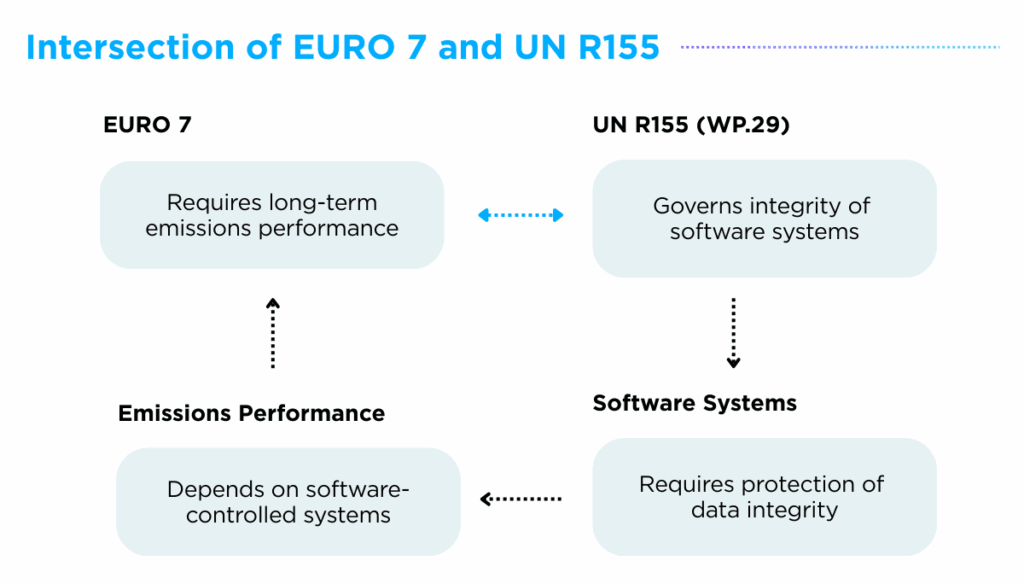
UN R155 governs software integrity within the WP.29 framework, and EURO 7 mandates long-term emissions and battery durability performance that depends on software-controlled systems. 

Intersection of EURO 7 and UN R155

Together, these requirements establish a structural dependency in which sustained emissions compliance relies on effective cybersecurity governance.  

This dependency is not merely conceptual. It is reinforced through explicit references to UN R155 within EURO 7, particularly in relation to cybersecurity measures, security requirements, and Threat Analysis and Risk Assessment (TARA) obligations.  

  • Article 4(11)  
    • Requires manufacturers to ensure the secure transmission of emissions and battery durability data by applying cybersecurity measures in accordance with UN R155
  • Annex XIV 
    • Defines anti-tampering, security, and cybersecurity requirements 
    • Incorporates UN R155 definitions of attacks 
    • Requires vulnerability minimization based on best available knowledge 
    • Mandates TARA processes that reflect EURO 7 objectives 
    • Provides conformity declaration templates for type approval submission 

These provisions demonstrate that EURO 7 does not operate independently of the WP.29 cybersecurity architecture; rather it integrates cybersecurity governance directly into emissions-related compliance obligations.   

III. Need for Digital Regulatory Convergence

In a software-defined vehicle environment, emissions compliance depends on the integrity, resilience, and governance of digital systems. As vehicles evolve into configurable, updateable and connected platforms, the ability to demonstrate sustained compliance throughout the vehicle’s operational life becomes essential.

Manufacturers must therefore move beyond documentation-based certification toward engineering-based accountability. Emissions-critical systems must be cyber-resilient, monitoring data must be protected against manipulation and overall system architecture must be secure-by-design.  

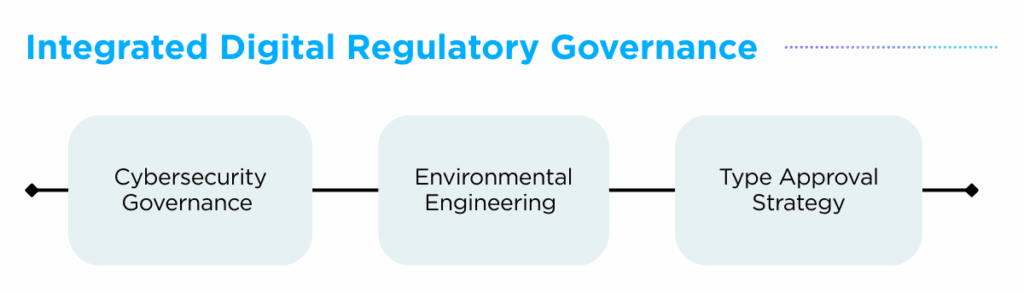
Within this regulatory landscape, the convergence of EURO 7 and the WP.29 cybersecurity framework establishes the need for integrated digital regulatory governance — aligning cybersecurity governance, environmental engineering and type approval strategy within a unified compliance architecture.  

Integrated Digital Regulatory Governance: Environmental engineering, Cybersecurity governance, Type approval strategy

At AUTOCRYPT, we support OEMs and Tier suppliers in navigating this regulatory convergence. Through our WP.29 consulting services (Link), we support firms in establishing and optimizing UN R155 Cybersecurity Management Systems (CSMS), conducting AI-powered Threat Analysis and Risk Assessments (TARA), and integrating cybersecurity governance into emissions-critical system architectures under a holistic regulatory strategy.  

Our objective extends beyond securing type approval. We help manufacturers sustain compliance throughout the vehicle lifecycle within an evolving regulatory landscape.

Additional Resources

AUTOCRYPT Unveils “Automotive-CIS,” a Global Integrated Cybersecurity Infrastructure Standard for Vehicles, at CES 2026

AUTOCRYPT, a leading automotive and AI cybersecurity solutions provider, announced at CES 2026 the launch of “Automotive-CIS (Cybersecurity Infrastructure Standard),” presenting a new global benchmark for vehicle cybersecurity infrastructure to the international technology community.

AUTOCRYPT Announces Launch of Automotive Cybersecurity Infrastructure Standard

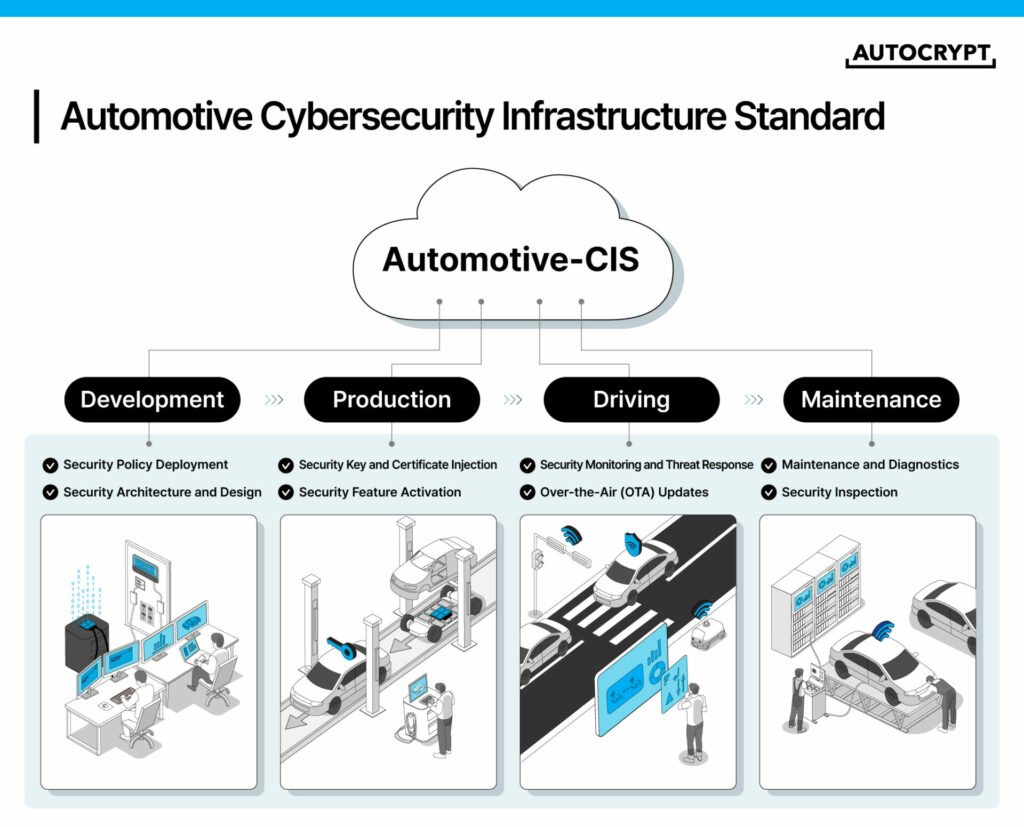
Automotive-CIS is an advanced and expanded version of Autocrypt’s Software Security Infrastructure solution previously delivered to automotive manufacturers (OEMs). The new standard broadens its scope to include suppliers and establishes an integrated security architecture spanning the entire vehicle software lifecycle from development and production, all the way to driving and maintenance.

By integrating key functions like the Cybersecurity Management System (CSMS), Software Update Management System (SUMS), Vehicle Security Operations Center (vSOC), and Threat Analysis and Risk Assessment (TARA) into a single infrastructure standard, Automotive-CIS provides a core reference model for OEMs and suppliers as the industry shifts to software-defined vehicles (SDVs) and AI-driven mobility.

Autocrypt’s extensive proof-of-concept (PoC) projects with both domestic and international OEMs and suppliers have served as a foundation for the global vehicle cybersecurity standard, shown through inclusion of tailored deployment roadmaps, expert consulting, and comprehensive regulatory compliance strategies across the supply chain.

CEO and co-Founder, Seokwoo Lee remarked on the unveiling, “Automotive-CIS represents the essential foundations necessary for this new era of SDVs, AI mobility, and post-quantum computing.” He continued, “We are delighted to present this at CES 2026, as it provides OEMs and suppliers with an opportunity to collaboratively address evolving security challenges across the vehicle lifecycle.”

Autocrypt is currently showing its solutions at CES 2026, in Las Vegas from January 6-9. Visitors are welcome at the Las Vegas Convention Center, West Hall Booth #4667. Meetings are available on-site, by reservation only. Book a meeting at https://calendly.com/autocrypt_global/. To learn more, visit autocrypt.io 


About Autocrypt Co., Ltd. 

AUTOCRYPT is the leading player in automotive cybersecurity. It specializes in the development and integration of security software and solutions for in-vehicle systems, V2X communications, Plug&Charge, and fleet management, paving the way towards a secure and reliable C-ITS ecosystem in the age of software-defined vehicles. Its comprehensive suite of automotive cybersecurity testing services and platforms includes the award-winning AutoCrypt CSTP, which supports automotive OEMs and suppliers in meeting regulatory standards ilke ISO/SAE 21434, UNECE WP.29 UN R155, and CRA.

Ensuring Safe, Seamless Vehicle Access

With the advent of software-defined vehicles, the concept of the car key has evolved from a physical device into a digital access system seamlessly connected to the driver’s smartphone. Through smartphone-based digital keys, drivers can lock, unlock, start vehicles and even share access to their vehicles — all through a single intuitive mobile experience.  

As vehicles become increasingly connected, the need for robust security grows alongside the convenience these systems provide. Every interaction between the smartphone, vehicle and backend must occur within a trusted, interoperable ecosystem that protects against unauthorized access and data compromise. This article explores the core components of a secure Digital Key Ecosystem and highlights the measures and technologies that enable safe, seamless, and scalable vehicle access.  

I. Secure Digital Key System Architecture

Digital key solutions operate within a complex ecosystem connecting multiple systems and communication layers. From user registration to daily vehicle operation and key revocation, every stage requires security embedded by design to ensure the digital key performs safely, reliably and seamlessly.   

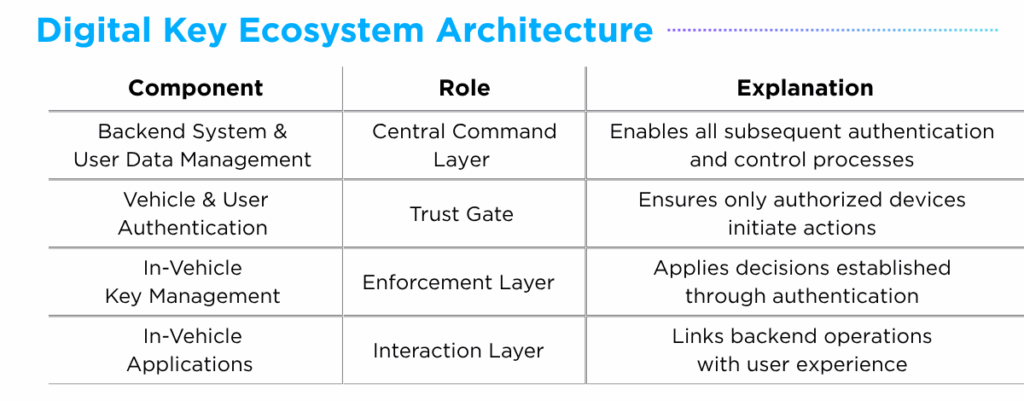
Digital Key Ecosystem Architecture

At the foundation of this ecosystem lies the Backend System & User Data Management layer, which links user accounts, vehicles and mobile devices through centralized control. This layer manages user registration, key issuance and access permissions across multiple vehicles, synchronizing updates between the mobile app and vehicle in real time. By continuously managing backend events such as invitations, temporary credentials and revocations, it ensures that digital key services remain scalable, interoperable and responsive to every user action.  

The next layer, Vehicle and User Authentication, safeguards trust between the user’s smartphone and the vehicle before any operation takes place. Through certificate-based authentication and encrypted communication, this layer verifies that both the driver and vehicle are legitimate participants in each interaction. As the core of identity verification, it ensures that every connection within the ecosystem begins from a trusted foundation, maintaining cybersecurity from the very first handshake.  

Beyond authentication, the In-Vehicle Key Management layer embeds protection directly within the vehicle. Every vehicle interaction is validated at the hardware level, controlling how digital keys are stored, verified and applied to vehicle systems. Whether online or offline, this layer preserves key confidentiality and enforces access rights while integrating proximity-based protection to prevent relay or spoofing attacks. In doing so, it enables continuous safeguarding of digital credentials throughout their active use.  

Finally, the In-Vehicle Applications layer provides the user-friendly interface that connects security with convenience. Hosting in-vehicle infotainment (IVI) and head-unit control (HCP) applications, it allows drivers to view key status, manage profiles and control access settings. By coordinating commands such as unlock, start and key sharing with backend systems in real-time, this layer ensures user interaction and consistent connectivity across all digital key features — whether for individuals or fleets.

II. End-to-end Digital Key Solution   

Digital key systems function as a unified ecosystem, with each component —  backend, authentication, in-vehicle systems, applications continuously exchanging data and trust signals. These interactions form a closed feedback loop, where every vehicle operation and user action is reported back to the backend for synchronization and validation. Building an effective digital key solution requires recognizing how these layers interact through a system-level approach.  

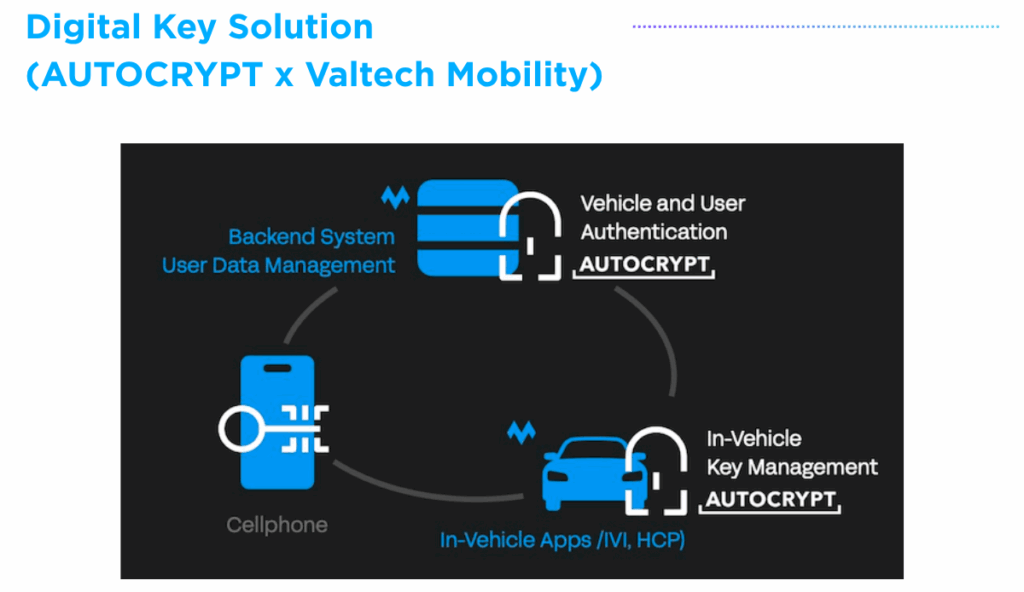
A prime example of such an approach is the co-developed Digital Key Solution by AUTOCRYPT and Valtech Mobility, unveiled at IAA Mobility 2025. Designed around interconnection and interoperability, the joint solution demonstrates how a unified architecture can deliver a secure, reliable, and scalable digital key experience built on shared standards and complementary expertise.  

Joint Digital Key Solution by AUTOCRYPT and Valtech Mobility GmbH

The solution’s architecture enables continuous communication between the backend, authentication layer, in-vehicle key management and smartphone interface:  

  • Backend System & User Data Management: Data synchronization and multi-user access are managed in alignment with Car Connectivity Consortium (CCC) guidelines.  
  • Vehicle & User Authentication: Real-time authentication between smartphone, vehicle and cloud is reinforced with Ultra-Wideband (UWB) proximity verification for precise, relay-resistant access control.  
  • In-Vehicle Key Management: Key credentials are handled within secure hardware environments, ensuring both performance and protection.  
  • In-Vehicle Applications: Access and control are provided through an intuitive smartphone interface, integrating convenience with end-to-end security.

This solution delivers clear advantages for both OEMs and users. For OEMs, its CCC-compliant, globally interoperable solution framework ensures readiness for standardized deployment. The solution’s purpose-built cloud system with open APIs enables fast, cost-efficient integration while remaining scalable and adaptable across different vehicle models and mobility platforms. Over time, this flexibility also creates new revenue opportunities through premium digital key and connected services.  

For users, the digital key can be accessed seamlessly through their smartphone, combining convenience with robust protection. Secure authentication and UWB-based proximity-based verification safeguard against unauthorized access, while controlled key sharing allows owners to grant temporary access to family members, friends, or service providers — without compromising privacy or data integrity.  

III. Conclusion

This article explored how the digital key ecosystem connects multiple systems and communication layers – from backend platforms to in-vehicle components and user applications – to deliver an end-to-end vehicle access experience. The jointly developed solution by AUTOCRYPT and Valtech Mobility GmbH exemplifies how an integrated approach can achieve security, scalability and user accessibility in unision.

Building on its proven expertise in Digital Key solutions, AUTOCRYPT continues to develop tailored digital infrastructure and foster strong technology synergies with global partners to advance the future of connected mobility.  

Learn more about our Digital Key expertise at https://autocrypt.io/products/digital-key/

Vehicle Tech at CES 2024: The Official Introduction of Software-Defined Vehicles

CES 2024 introduced the world to the new era of software-defined vehicles, signifying the beginning of a massive technology transition in the automotive field. At its CES debut, AUTOCRYPT emphasized the importance of automotive cybersecurity for software-defined vehicles, while demonstrating its security solutions and testing tools for in-vehicle systems and V2X communications.

On January 9, 2024, AUTOCRYPT made its first appearance at CES, the world’s most influential tech event. Taking place conveniently at the beginning of the year, CES is the biggest stage for tech companies across the globe to showcase their innovations of the year. This year, more than 4,000 exhibitors and over 130,000 industry attendees gathered in Las Vegas for the show.

Originally known as the Consumer Electronics Show, the scope of CES has expanded far beyond consumer electronic products and now encompasses all types of technologies used throughout all stages of the value chain. Starting in 2019, the automotive tech industry has been playing an increasingly dominant role at the show, showcasing advanced automotive technologies like electric vehicles and autonomous vehicles.

Vehicle Tech Trend at CES 2024: Software-Defined Vehicles

At CES 2024, vehicle and mobility-related technology accounted for nearly half of the entire exhibition. The automotive industry has now become the center of technology innovations, a phenomenon driven by two major transitions in the industry:

  1. The shift from internal combustion engines to electric motors
  2. The switch from hardware-centric to software-centric vehicular architecture

The first transition was shown in previous CES exhibitions, where manufacturers showcased their latest electric vehicle models and concepts. The share of electric vehicles on the roads has also increased significantly throughout the past few years. CES 2024 brought the focus to the second transition, which has been less apparent to the public. Automotive OEMs and suppliers are now showcasing the latest software-centric architecture, operating systems, platforms, and applications, all of which are based on the fundamental concept of software-defined vehicles.


Breaking Down the Software-Defined Vehicle

What is the SDV?

The term “software-defined vehicle”, or “SDV”, has been widely used within the automotive industry to describe cars whose functionality and features can be upgraded over time through software updates. These cars provide a user experience comparable to smartphones and computers, often equipped with a tablet-like central console that controls all features.

Standardized middleware

The transition to SDVs requires a complete overhaul of the automotive manufacturing process. The transition not only requires the decoupling of hardware and software, but also the ability to perform software updates to specific components without impacting the interoperability of these components with the rest of the vehicle. The AUTOSAR Adaptive Platform is a middleware built for this purpose, allowing different manufacturers to build and update software on a standardized platform. In the end, automotive OEMs will need to dedicate most of their resources to software consolidation rather than hardware assembly.

Growing range of communication protocols

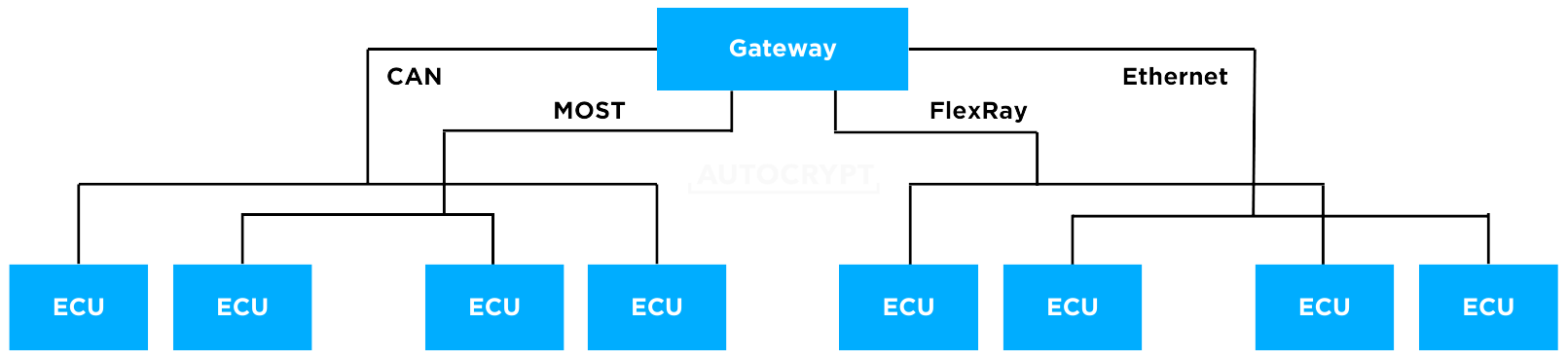
The growing diversity of vehicular applications leads to a growing need for dedicated communication protocols. The fundamental CAN (CAN FD) and FlexRay buses are signal-based communication channels necessary for real-time safety-critical (ASIL-D) use cases, such as braking, steering, airbag activation, and engine control. Yet, these protocols do not carry enough bandwidth for multi-tasking and large-size data transfer. This led to the implementation of many new communication protocols. Ethernet, for instance, is becoming increasingly prevalent in cars as it offers extremely high bandwidth at a cheap cost, best suited for advanced applications. SOME/IP is used to connect ECUs with different sizes, such as the in-vehicle infotainment (IVI), head unit, telematics control unit, and cameras.

Centralized E/E architecture

With the growing number of advanced features, a high-end car can have up to 300 ECUs. This is overly complex to build on a conventional distributed E/E architecture—there is simply not enough room to fit all the cables and wires.

A conventional distributed E/E architecture

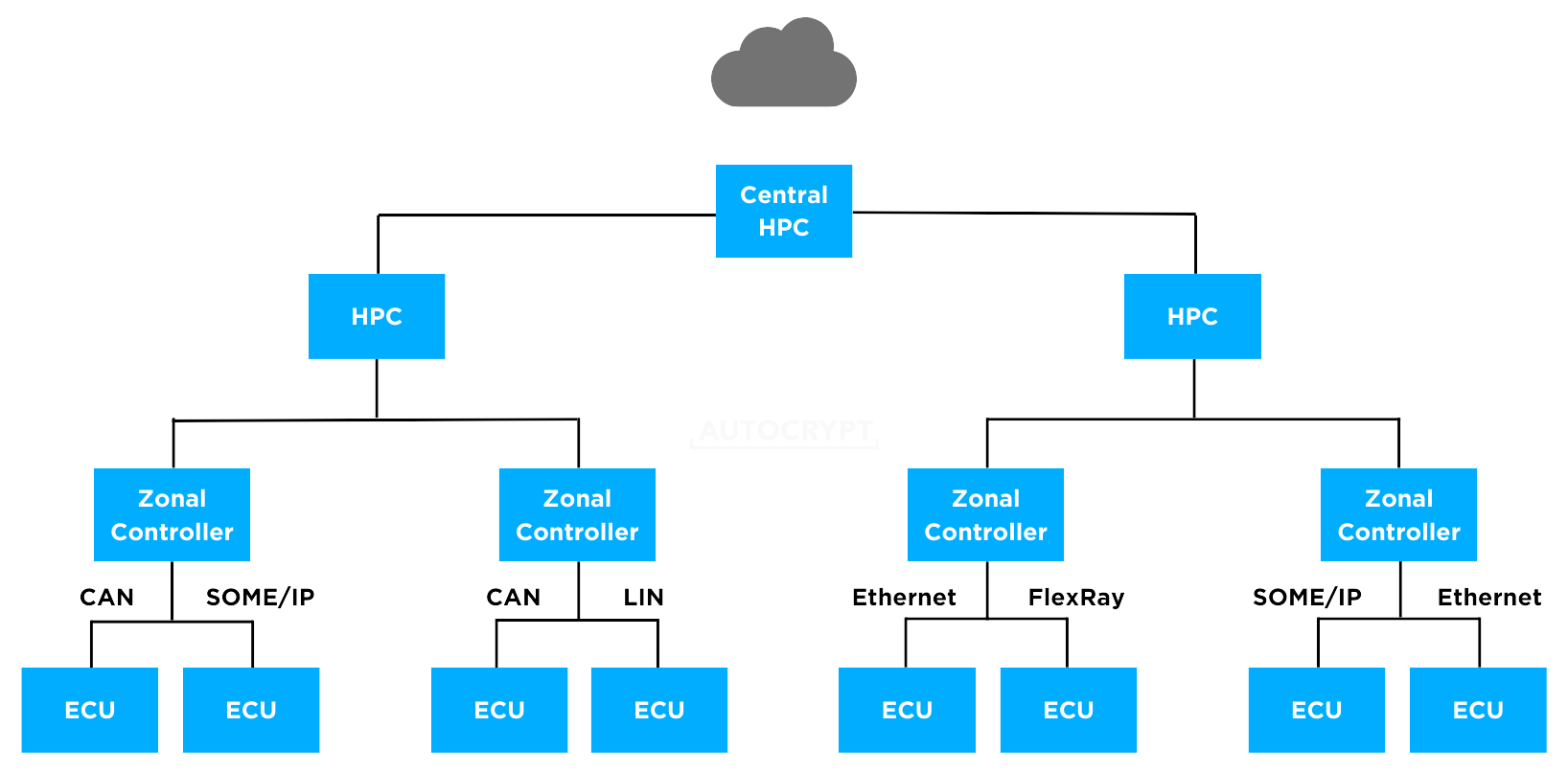
To reduce the number of cables and wires while accommodating all the advanced applications, advanced processors like zonal controllers and high-performance computers (HPC) must be adopted. Different from controller-based ECUs, these processor-based ECUs consolidate a wide range of software from different domains and process them on a single central computing unit. Since they can communicate via multiple protocols, functional domains like ADAS, IVI, and body control can all be executed on a single HPC.

A centralized (zonal) E/E architecture
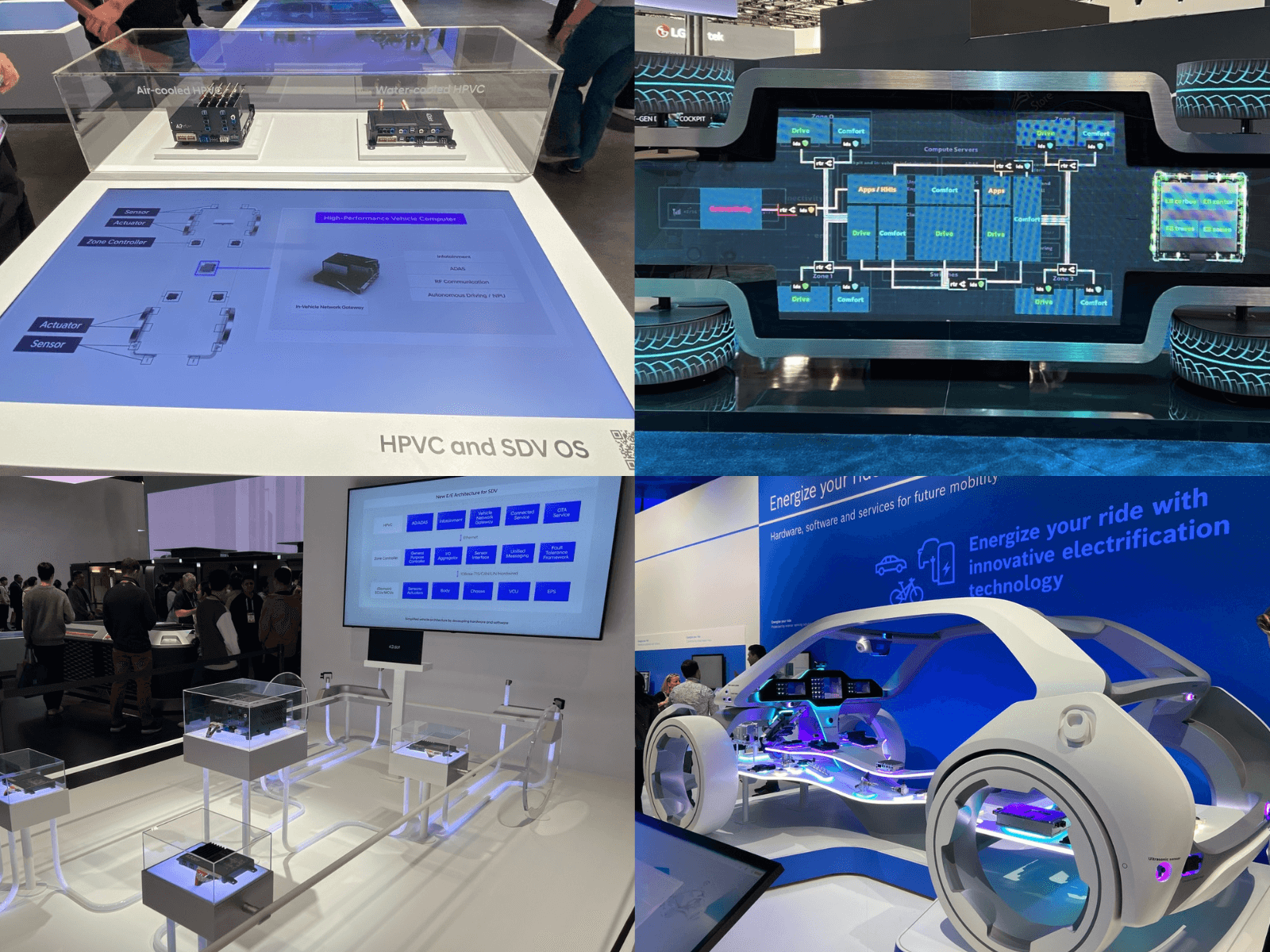
CES 2024: Major chipmakers now making automotive processors for SDVs.

Automotive OS

The complete software stack of a software-defined vehicle is commonly referred to as the “automotive OS”. This contains the HPC, the hypervisor—which allows the HPC hardware to execute both backend applications and the frontend UX, the backend OS (OSEK OS, Linux, QNX), the user OS (Android Automotive – not to be confused with Android Auto), the AUTOSAR Adaptive stack, and the applications—often placed in containers for easy management and update.

CES 2024: Automotive OEMs and suppliers showcase their SDV OS, HPCs, and platforms.

Automotive cybersecurity

As automotive OEMs become software companies, cybersecurity becomes essential. In fact, cybersecurity is an integral component of SDVs, as standardized by ISO/SAE 21434 and regulated by UN Regulations 155/156. When implementing the automotive OS, end-to-end encryption, two-way authentication, and threat detection mechanisms must be incorporated to secure the in-vehicle network and monitor abnormal ECU activities.

Besides embedded security software, automotive cybersecurity must begin at the vehicle development stage, where vulnerability tests like software composition analysis and fuzzing have become legal requirements.

As an industry-leading automotive cybersecurity company, AUTOCRYPT offers a comprehensive cybersecurity solution for software-defined vehicles, covering vulnerability testing, TARA, and embedded security, all of which are custom-built to support all types of communication protocols and platforms. Its latest development – AutoCrypt Security Fuzzer for HIL – enables fuzz testing in hardware-in-the-loop (HIL) simulation environment.

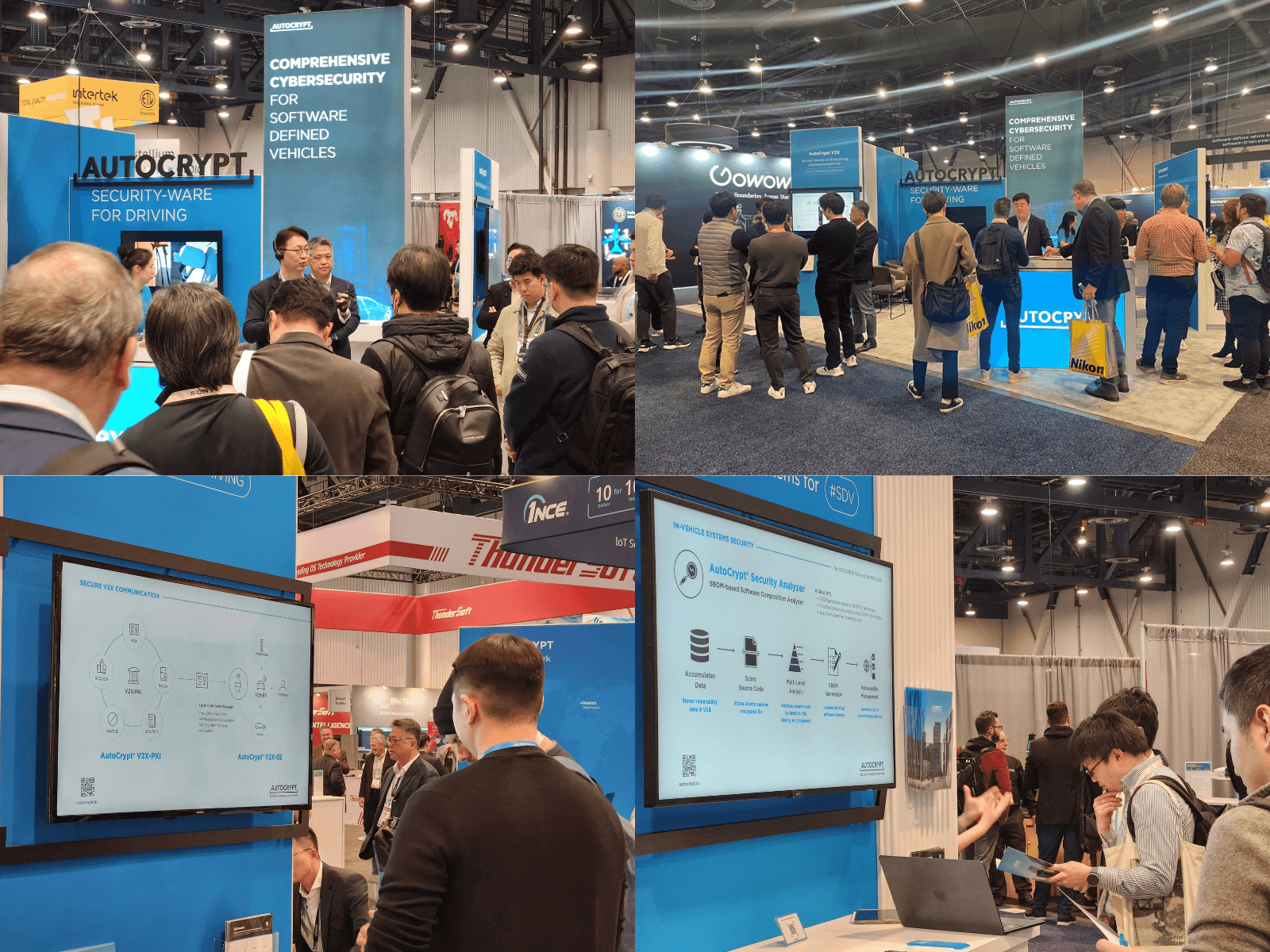
CES 2024: AUTOCRYPT demonstrates its cybersecurity solutions for SDVs.

The Future of SDVs: Autonomous Driving, In-Car Shopping, Shared Mobility

The transition to SDVs is fundamental to autonomous driving, given that autonomous driving software needs continuous updates. Autonomous vehicles continue to be a major topic at CES 2024. What’s different from the past is that there is now a much wider array of use cases for autonomous mobility, from last-mile delivery vehicles to remote-driving tractors.

Other trends that accompany the SDV evolution include the growing number of in-vehicle infotainment features such as online shopping and media consumption, as well as the emergence of purpose-built vehicles made for specific use cases.

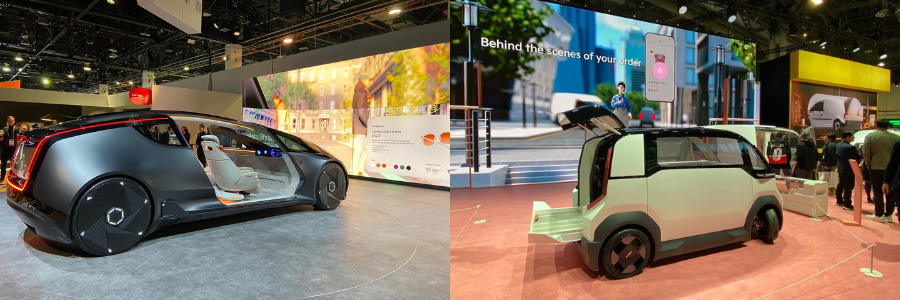
CES 2024: The IVI dashboard of an autonomous vehicle (left) and a last-mile delivery vehicle (right)

Ultimately, SDVs are creating a new ecosystem that is attracting all types of technological innovations and opportunities, an ecosystem that is more scalable and adaptable than smartphones. Therefore, SDV-related technologies are expected to dominate the tech industry for many years to come.

AUTOCRYPT and Cohda Wireless Sign MOU at CES 2024 to Collaborate on Security-Integrated V2X Solution

LAS VEGAS, Jan. 11, 2024 — AUTOCRYPT, a leading automotive cybersecurity and mobility solutions provider, and Cohda Wireless, a global connected vehicle solutions company, signed a Memorandum of Understanding on the opening day of CES 2024, kickstarting their collaborations on bringing a secure, full-stack solution for V2X communications.

Cohda Wireless is a global leader in V2X technology both in R&D and commercialization, with the world’s most advanced V2X software stacks supporting both 802.11p and C-V2X protocols. They are active in the European, US and Asian markets, with products compliant with the respective regional standards.  Cohda Wireless solutions have undergone extensive compliance and interoperability testing and have notched up over one million vehicle-days of field testing. 

As a pioneer in automotive cybersecurity, AUTOCRYPT has over a decade of experience and expertise in securing V2X connectivity. Its offerings encompass a security library for end entities, a V2X PKI platform with misbehaviour detection, and an integrated management dashboard for SCMS operations.

Both companies share a vision of a safe and seamless C-ITS ecosystem for all road users. As part of the collaboration, AUTOCRYPT’s V2X security library, AutoCrypt V2X-EE, will be integrated into the overall V2X software stacks of Cohda Wireless, shaping a full-stack, secure V2X solution for automotive OEMs and Tier-1 suppliers.

“AUTOCRYPT provides the world’s first and only V2X security solution adaptable to all major V2X PKI standards, including the US SCMS, EU CCMS, and Chinese C-SCMS. This enables us to offer customized solutions to clients across the globe.” said Daniel ES Kim, CEO of AUTOCRYPT. “We are excited to collaborate with Cohda Wireless on offering a complete V2X software stack to ensure the reliability of V2X communications.”

“We are delighted to be a part of another global first in our industry,” explained Cohda CEO Dr. Paul Gray. “As the implementation of connected intelligent transport systems rolls out across the globe, so will there be an ever-increasing need to safeguard sensitive data. Our partnership with AUTOCRYPT adds an additional layer of maturity to our product that we believe the market will recognize.”

About Autocrypt Co., Ltd.

AUTOCRYPT is the leading player in automotive cybersecurity and smart mobility technologies. It specializes in the development and integration of security software and solutions for in-vehicle systems, V2X communications, Plug&Charge, and fleet management, paving the way towards a secure and reliable C-ITS ecosystem in the age of software-defined vehicles. AUTOCRYPT also provides management and service platforms for the operators and end users of MaaS, contributing to sustainable and universal mobility.

Built to support both AUTOSAR and legacy vehicular platforms, AUTOCRYPT’s In-Vehicle Systems Security solution helps automotive OEMs and suppliers comply with both ISO/SAE 21434 and UN R155. The company is also the sole V2X security provider for all South Korea’s C-ITS projects, securing over 5,000 km of smart roads.

About Cohda Wireless Pty Ltd

Cohda Wireless is a global leader in the development of Connected Vehicles and Connected Autonomous Vehicle software with proven applications for Smart City, Mining and other environments. Cohda’s technology connects vehicles with infrastructure and pedestrians to make our streets, cities and working environments safer, smarter and greener.  Cohda is headquartered in Australia and has offices in Europe, China and the USA.  

Cohda Wireless’s innovative software solutions enable autonomous vehicles to connect with other vehicles and with Smart City infrastructure. These connections span Vehicle¬to¬Vehicle, Vehicle¬to¬Infrastructure, and Vehicle¬to-Pedestrian (collectively called V2X), and allow CAVs to ‘talk’ to each other, Smart Cities, and vulnerable road users in order to avoid accidents, reduce congestion and be more efficient. Cohda partners with Tier 1 Automotive Suppliers, ITS Equipment Vendors, and Mining Equipment Technology and Services (METS) vendors to provide complete hardware/software solutions to Car Makers, Smart Cities, and Mine Operators, respectively. Cohda’s products are used widely in locations including the USA, Europe, Australia, Japan, Africa, Middle East, China, Singapore and Korea.