Exploring Maneuver Sharing and Coordinating Service (MSCS) in Autonomous Driving

Autonomous driving is advancing rapidly, with self-driving cars being tested in urban mobility, highways, and logistics. Have you ever wondered how these vehicles communicate to navigate safely? Unlike human drivers, who rely on signals and intuition, autonomous vehicles use data-sharing systems. This blog examines the limitations of cooperative driving systems and introduces Maneuver Sharing in Autonomous Driving through the Maneuver Sharing and Coordinating Service (MSCS) as a solution to improve vehicle communication, safety, and efficiency.

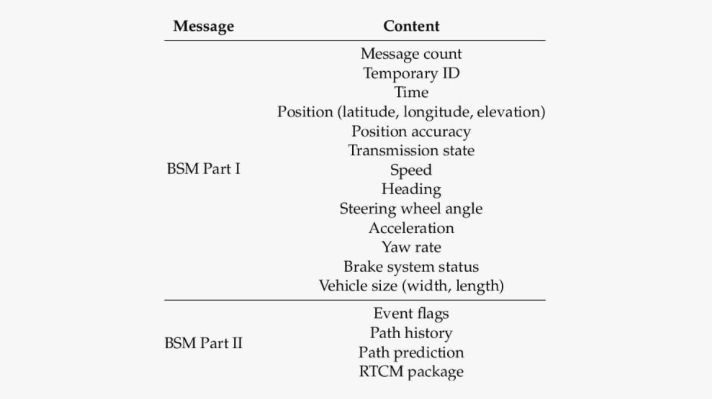
Current cooperative autonomous driving systems rely on Basic Safety Messages (BSMs) within Vehicle-to-Everything (V2X) communication. Each vehicle regularly transmits BSM data, sharing essential information such as speed, position, and heading with surrounding vehicles. This allows vehicles to assess potential collision risks and respond accordingly.

However, BSMs alone cannot convey the intent behind a vehicle’s movements. As shown in the graph below, a BSM provides only fundamental status data without explaining why a vehicle is moving in a certain way.

Basic Safety Messages within V2X

In other words, while BSMs enable cooperative autonomous driving, they lack the capability to communicate driving intentions. If vehicles could understand the purpose behind each movement in advance, particularly in emergency situations, driving safety and efficiency would significantly improve.

Real-World Scenario: The Need for MSCS

To illustrate this, let’s define two key entities:

  • HV (Host Vehicle): The vehicle transmitting its movement intention.
  • RV (Remote Vehicle): The vehicle receiving the movement information.

Now, consider a different scenario: What if the HV had already informed nearby RVs of its intent to change lanes in advance? In that case, the RV could adjust its route ahead of time, leading to a smoother and safer driving experience.

The same idea applies beyond driving. In any situation, whether at work, in school, or during teamwork, understanding someone’s intentions before they act allows for better planning, coordination, and overall efficiency.

What is MSCS?

To overcome the limitations of BSMs, the Maneuver Sharing and Coordinating Service (MSCS) offers a smarter approach to cooperative driving.

MSCS enhances V2X communication by enabling vehicles to share their intended maneuvers. Understanding the purpose behind a vehicle’s movement enables better analysis and response, enhancing overall road safety and efficiency.

Unlike traditional BSM-based driving, which reacts to real-time data, MSCS enables proactive decision-making by considering the planned maneuvers of surrounding vehicles. This advancement leads to a smoother and more coordinated driving experience.

Autonomous Maneuver Sharing in SAE J3186 standards

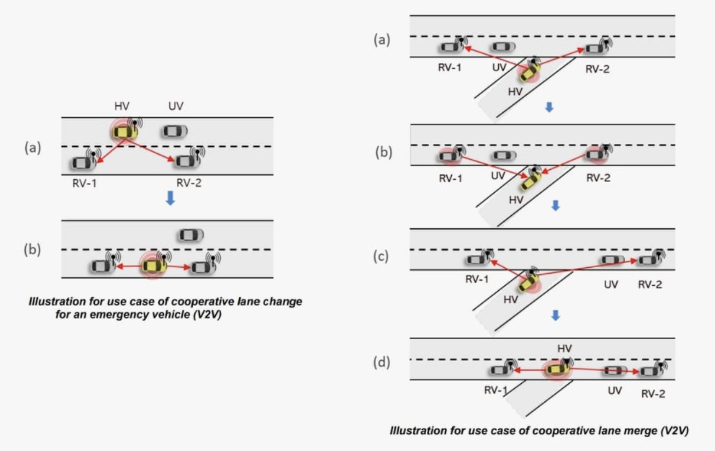
MSCS operates in compliance with SAE J3186 standards, which defines its primary use cases as:

  1. Cooperative Lane Change
  2. Cooperative Lane Merge

These scenarios demonstrate how MSCS enables smoother lane changes and merges by allowing vehicles to communicate their intended movements. Through MSCS, vehicles notify one another and cooperate to execute maneuvers safely.

It is important to note that MSCS is designed to function based on vehicle intent and follows two distinct communication protocols:

  1. General Vehicle Protocol: Requires mutual negotiation through request and response interactions.
  2. Emergency Vehicle Protocol: Prioritizes emergency vehicles (e.g., ambulances, police cars) without requiring negotiation from surrounding vehicles.

In general, standard vehicles (following the General Vehicle Protocol) must yield to emergency vehicles (following the Emergency Vehicle Protocol). This ensures that special-purpose vehicles can operate efficiently without mutual negotiation.

By implementing MSCS, vehicles can share movement intentions, enabling others to adapt proactively. This results in safer, more efficient, and cooperative autonomous driving.

MSCS and MSCM

Next, let’s differentiate between MSCS and MSCM to explore the operational aspects of MSCS.

  • MSCS (Maneuver Sharing and Coordinating Service): The overall system that enables maneuver coordination
  • MSCM (Maneuver Sharing and Coordinating Message): The message exchanged between vehicles to communicate movement intent

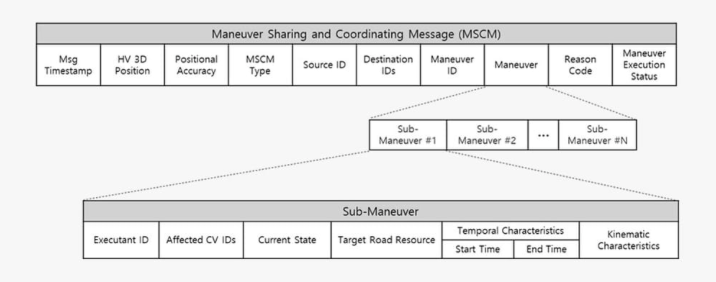
The graph below illustrates the structure of MSCM:

Structure of Maneuver Sharing and Coordinating Service (MSCM)

In MSCS, a Maneuver represents a coordinated movement involving multiple vehicles, while a Sub-Maneuver refers to the individual actions each vehicle takes to carry out that Maneuver.

The Executing Vehicle (HV) initiates the Maneuver request and identifies surrounding Affected Vehicles, which receive MSCM messages to coordinate movement. HV must obtain agreement from Affected Vehicles unless it is an emergency vehicle.

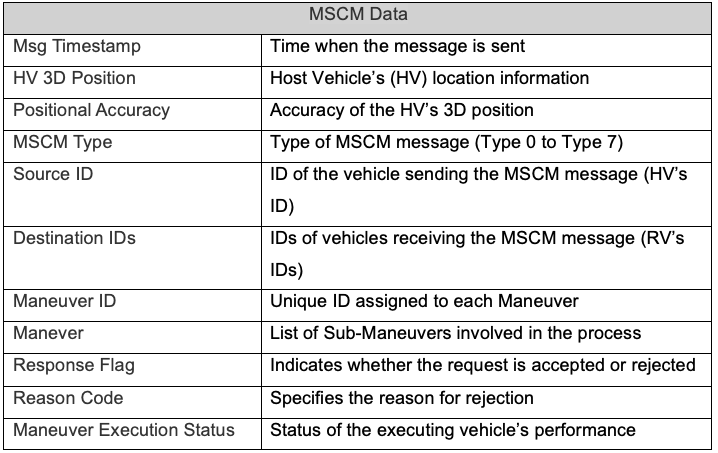
MSCM Data Structure

MSCM Data Structure

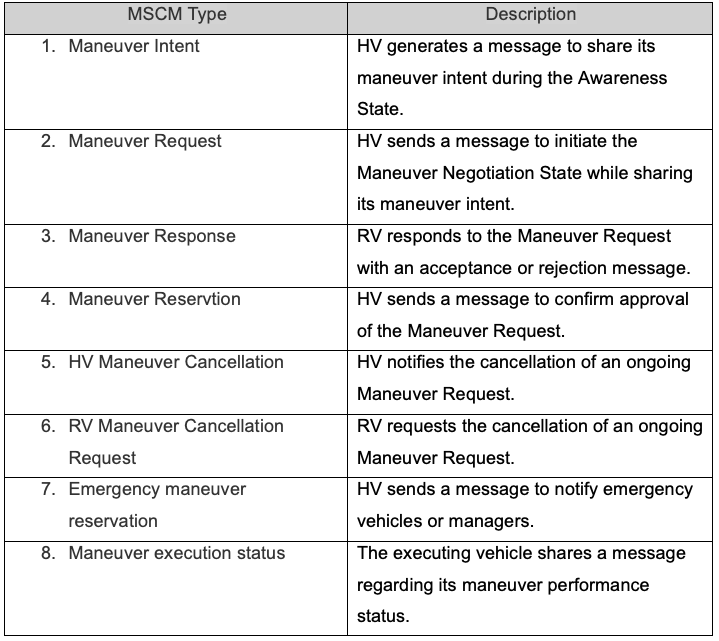
MSCM messages contain key data components, including the MSCM Type, which classifies messages into one of eight types:

Autonomous Maneuver Sharing: MSCM Type

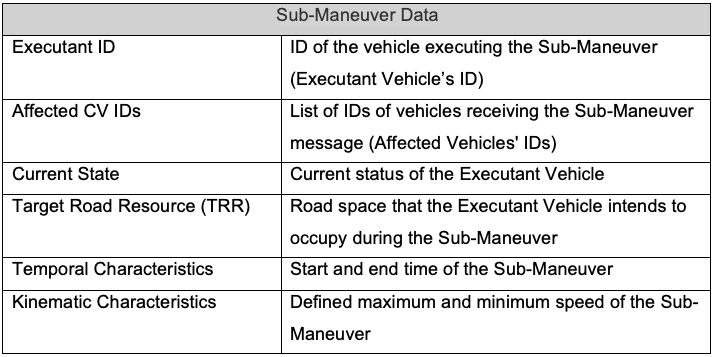
Additionally, each Maneuver in MSCM consists of multiple Sub-Maneuvers, structured as follows:

Sub-Maneuvers Data

In conclusion, there are 8 types of protocols for each Maneuver in MSCM.

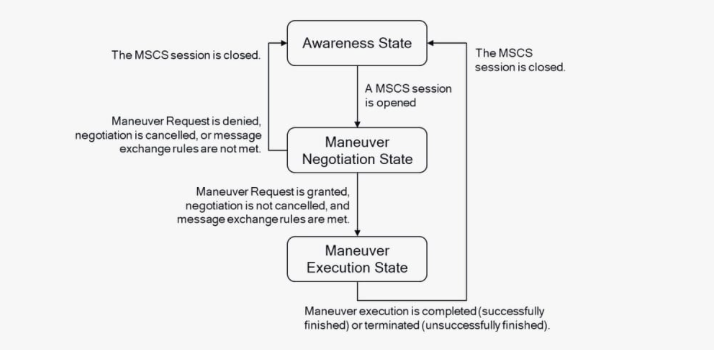
MSCS Operational Process

To understand the operation of MSCS, let’s examine how it functions in standard vehicles. The system follows three sequential stages:

  1. Awareness State
  2. Maneuver Negotiation State
  3. Maneuver Execution State

MSCS Operational Process

  1. Awareness State
    • This is the preliminary stage of MSCS operation
    • While vehicles are aware of their surroundings via BSM, they have not initiated MSCS yet
    • Only MSCM Type 0 messages (intention notifications) can be sent in this stage
  2. Maneuver Negotiation State
    • Vehicles begin negotiating the execution of a Maneuver
    • Emergency vehicles skip this step, as negotiation is not required
    • MSCM Types 1-3 are used to request and confirm Maneuvers, while Types 4-5 handle cancellations
  3. Maneuver Execution State
    • Vehicles execute the approved Maneuver
    • The HV and RV reach a mutual agreement and act accordingly
    • MSCM Type 7 messages confirm execution, and the Maneuver concludes when all Sub-Maneuvers are completed.

In conclusion, Maneuver Sharing and Coordinating Service (MSCS) represents a significant advancement in autonomous driving, allowing vehicles to communicate their movement intentions and not just their basic status. By enhancing Vehicle-to-Everything (V2X) communication, MSCS improves safety, coordination, and efficiency on the road. Unlike traditional systems that react to real-time data, MSCS enables proactive decision-making, particularly in complex scenarios like lane changes or merges.

With protocols that prioritize emergency vehicles and ensure smooth coordination, MSCS creates a structured environment for vehicles to work together seamlessly. This proactive approach helps prevent collisions, reduces traffic congestion, and leads to safer, more efficient roads. As autonomous vehicles continue to evolve, MSCS will be at the forefront of shaping a future where roads are not only safer but also smarter, bringing us closer to a fully integrated, autonomous transportation system.


To stay informed about the latest news on mobility tech and software-defined vehicles, read our blog for more technology insights or subscribe to AUTOCRYPT’s monthly newsletter.

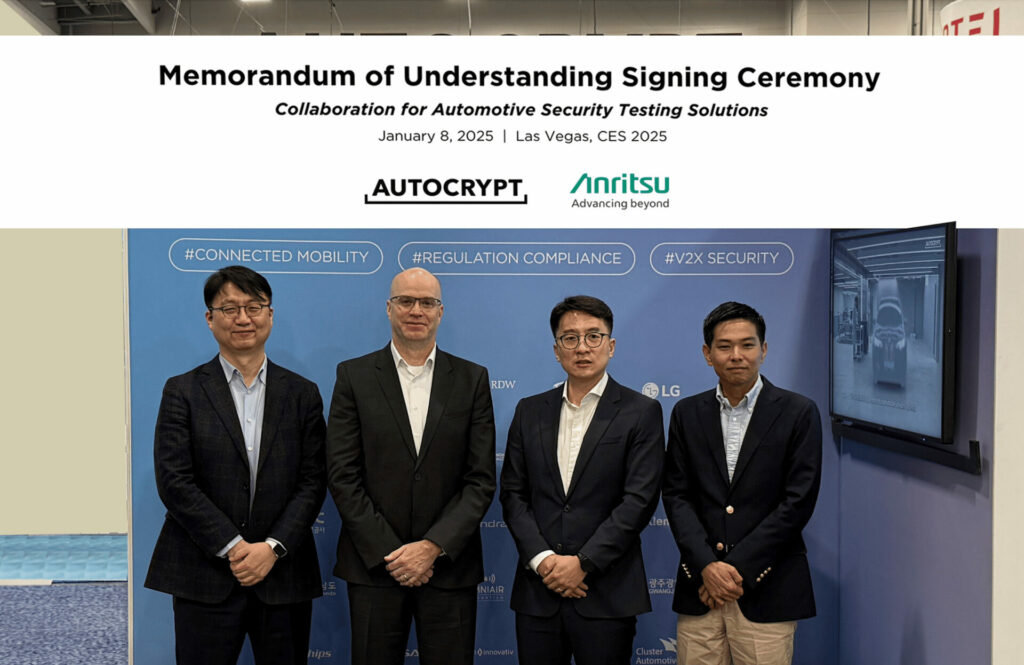
Anritsu and AUTOCRYPT Sign MOU at CES 2025 to Advance Automotive Security Testing(CSTP) through Simulated 5G Networks

LAS VEGAS, JANUARY 8, 2025. – AUTOCRYPT, an industry-leading vehicle cybersecurity provider, has signed a Memorandum of Understanding (MoU) with Anritsu, a pioneer in communications test and measurement solutions. The agreement, formally announced at CES 2025, underscores a shared commitment to advance security testing methodologies for vehicles worldwide.The collaboration will integrate AUTOCRYPT’s award-winning Cybersecurity Testing Platform (CSTP) with Anritsu’s Radio Communication Test Station MT8000A, which provides a simulated 5G network environment. The partnership aims to simplify and enhance cybersecurity testing, ensuring robust protection for evolving vehicle systems.

Anritsu and AUTOCRYPT Sign MOU at CES 2025

“By combining our decades-long expertise in cybersecurity with Anritsu’s network simulation capabilities, we’re setting a new standard for security testing in the 5G era,” said Daniel ES Kim, GCTO of AUTOCRYPT. “Testing can often be a cumbersome process, deterring type approval. But with AutoCrypt CSTP, OEMs gain access to a customized, efficient testing platform. Our partnership with Anritsu will further streamline testing, empowering OEMs to meet stringent cybersecurity requirements and provide more drivers with a secure driving experience.

“With the increasing concern over vehicle safety, cybersecurity testing has never been more vital,” said Yukiharu Ogawa, IoT Test Solution Division General Manager of Anritsu. “We’re thrilled to collaborate with AUTOCRYPT in delivering the tools necessary to test systems through our cellular network simulator. With this MOU formalized at CES, we believe it will highlight both our companies’ dedication to fostering a safer future.”

The MOU comes at a critical time, as governments and regulatory organizations worldwide implement stricter cybersecurity standards for connected and autonomous vehicles (CAVs). With frameworks such as the UNECE’s WP.29 UN R155, 156, India’s AIS-189, and China’s GB/T standards, automotive manufacturers and suppliers face mounting pressure to demonstrate compliance.

AUTOCRYPT and Anritsu’s collaboration will also enable comprehensive security testing for a variety of applications beyond vehicle communications systems. The collaboration will address the diverse security demands of modern day connected mobility, offering the industry an efficient solution to meet regulatory requirements, as well as enhancing resilience across a broad spectrum of technologies.


About Autocrypt Co., Ltd.

AUTOCRYPT is the leading player in automotive cybersecurity and smart mobility technologies. It specializes in the development and integration of security software and solutions for in-vehicle systems, V2X communications, Plug&Charge, and fleet management, paving the way towards a secure and reliable C-ITS ecosystem in the age of software-defined vehicles. Its comprehensive suite of automotive cybersecurity testing services and platforms includes the award-winning AutoCrypt CSTP, which supports automotive OEMs and suppliers in meeting regulatory standards ilke ISO/SAE 21434, UNECE WP.29 UN R155, as well as other emerging global standards.

About Anritsu Corporation

Anritsu is a provider of innovative communications test and measurement solutions. Anritsu engages customers as true partners to help develop wireless, optical, microwave/RF, and digital solutions for R&D, manufacturing, installation, and maintenance applications, as well as multidimensional service assurance solutions for network monitoring and optimization. Anritsu also provides precision microwave/RF components, optical devices, and high-speed electrical devices for communication products and systems. The company develops advanced solutions for emerging and legacy wireline and wireless technologies used in commercial, private, military/aerospace, government, and other markets.

AUTOCRYPT to Showcase Award-Winning Cybersecurity Solutions at CES 2025

AUTOCRYPT, a global leader in automotive cybersecurity and testing solutions, has announced its participation in the 2025 Consumer Electronics Show (CES) in Las Vegas from January 7-10, 2025.

At the upcoming CES, AUTOCRYPT will unveil its latest advancements in automotive cybersecurity, with a focus on:

  1. Award-Winning Cybersecurity Testing Platform (CSTP): Recognized as a top innovator in the digital category of the 2024 CLEPA Innovation Awards, CSTP streamlines the automotive regulatory compliance process by enabling diverse security tests to be executed and managed on a single platform. Visitors can experience a live demo of this cutting-edge solution.
  2. Comprehensive In-Vehicle Systems Cybersecurity Solutions: Ensuring the safety of in-vehicle systems, AUTOCRYPT’s suite of solutions protects critical vehicle components from evolving threats.
  3. Secure Vehicle-to-Everything (V2X) Communication Solutions: AUTOCRYPT’s V2X security technologies safeguard data transmission between vehicles and infrastructure, enabling secure and reliable communication for the future of smart mobility.

“Kicking off 2025, AUTOCRYPT is excited to bring our award-winning Cybersecurity Testing Platform to the global stage at CES,” said Duksoo Kim, CEO of AUTOCRYPT. “As the automotive industry continues to embrace software, electrification, connectivity, and autonomous driving, our mission is to ensure that every aspect of the process is secure.”

This will be AUTOCRYPT’s second year exhibiting at the internationally acclaimed CES; the company’s presence underlines its commitment to innovation and leadership in securing the future of connected and autonomous mobility. Attendees are encouraged to stop by AUTOCRYPT’s booth (#3674) at Las Vegas Convention Center’s West Hall for live demonstrations and in-depth discussions with AUTOCRYPT’s team of security experts.

About Autocrypt Co., Ltd.

AUTOCRYPT is the industry leader in automotive cybersecurity and connected mobility technologies. The company specializes in the development and integration of security software and solutions for in-vehicle systems, V2X communications, Plug&Charge, and mobility platforms, paving the way towards a secure and reliable C-ITS ecosystem in the age of software-defined vehicles. AUTOCRYPT also provides consulting and testing services along with custom solutions for UN R155/156 and ISO/SAE 21434 compliance.